Sometimes, when people see me dragging a large camera and some heavy lenses and tripods around, they assume I know a bit about photography.
Or sometimes I just mutter something obtuse like “an F-number is just a ratio between lens opening and focal length” that tips them off.
Fact is, I grew up in an era where, if you wanted to make decent pictures, you would have to know this stuff — or take up painting. There was no way around it. Yes, I’m old.
Anyway, I get asked stuff on a regular basis. I’m going to build something out of that, and this post will be one of the bricks. But I am one who wants you to understand, rather than follow instructions, so we’ll be here for a while.
So what the **** is a “stop”?
A stop is a change of an exposure parameter that doubles or halves the exposure value.
I hear you cry. Let’s dive into that; it’s easier than it sounds.
Until we get to f-numbers, then it gets rough again. But I’ll try to get you through.
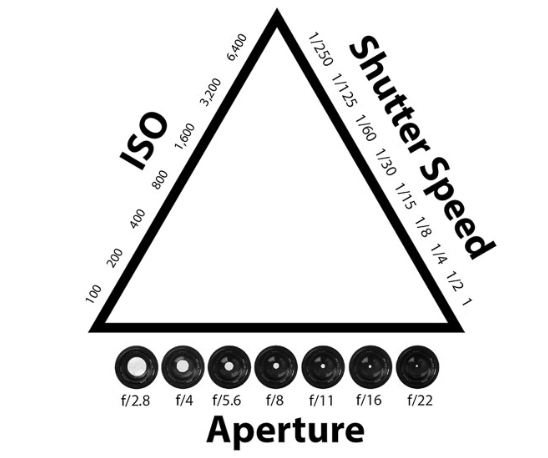
We are dealing with three exposure parameters: exposure time (that’s your shutter speed, like 1/125th of a second), lens opening (that’s the size of the hole in the lens that lets the light in — like F5.6) and the sensitivity setting (expressed in an ISO value, for instance ISO400).
So changing the exposure time from 1/125 to 1/250 while leaving everything else the same reduces the exposure with one stop.
Increasing the ISO setting on your camera from ISO400 to ISO800 adds one stop to the exposure.
“Aha. OK! So, changing the F-number from 4 to 8 would also add one stop to the exposure, right?“
You wish. That answer is wrong, and in two ways, even.
“AAAAARGH!!1! This is stupid! What is this sorcery?“
I feel your pain. And I don’t know the answer. But this isn’t you being stupid.
Somewhere along the line, there was a guy called John Henry Dallmeyer, a 19th‑century lens maker. Brilliant man. Terrible communicator.
He took the decision to express the lens opening as a relation between the focal length and the diameter of the hole that lets the light in. It’s called an exit pupil, but that’s jargon, you know? I’ll stock to hole.
In a 100mm lens, f4 would mean that the diameter of the hole is 25mm. Hence f4.
In a 50mm lens, f4 would be a hole with a diameter of 12.5mm. That’s good, because to get as much light through a 100mm lens with f4 as you get with a 50mm lens, you have to drill make the hole twice as big. So when your light meter says “use F4 by 1/125 at ISO400”, you didn’t have to worry about the focal length.
And it gets worse — because the numbers do not multiply by 2 if you use the radius. If you double the diameter of a circle, the surface area is 4 times as big! I promised to not bore you with math, so I won’t go there.
Unless you insist.
That’s why f4 lets twice the light in when compared to f5.6.
(for the insistent: A = πr2)
When we were told this in photography class in the late seventies (oh man, that’s half a century ago!), we didn’t blink an eye. All of the folks who went to a photography academy had already been doing a lot of photography prior. So the array “1.4-2-2.8-4-5.6-8-11-16” made perfect sense to us — it was etched in our brain. We were already conditioned to accept that that was how the world worked.
But if we could start from scratch today, I’d be a strong advocate to express the F-number as a value that expresses how much light it lets in!
Consider this table:
| Light quantity | F-number |
| 1 | 22 |
| 2 | 16 |
| 4 | 11 |
| 8 | 8 |
| 16 | 5.6 |
| 32 | 4 |
| 64 | 2.8 |
| 128 | 2 |
| 256 | 1.4 |
Which array of values makes more sense to you?
32 (f4) lets more light in than 16 (f5.6). In fact, 32 (f4) lets twice as much light in as 16(f5.6)!
But yeah. We’re never going to convince anyone of our idea, so I guess we’re confined to the F-number concept until Judgement Day.
So… if your light meter says “at ISO400, you need 1/125 and f4”, and you want to overexpose one stop (because it’s a snowy landscape, for instance), you either go from 1/125 to 1/250, or you go from f4 to…
“f… 8?”
No… look at the table again: one stop — (half the light quantity) is from f4 to f5.6.
Or, if you insist on sticking to 1/125 and f4, you could go from ISO400 to ISO800.
And all of a sudden, the exposure triangle starts to (hopefully) make sense!
To be continued…